


Timothy Speed – Autistic artist and researcher, filmmaker, book author, activist
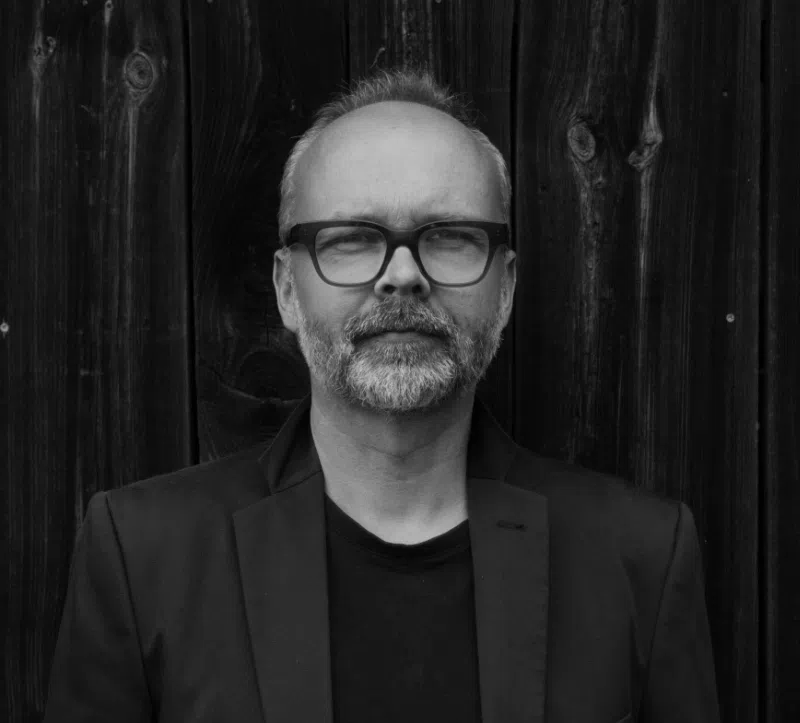
Timothy Speed (born 1973 in Middlesbrough, United Kingdom) is a British-Austrian, neurodivergent artist, author and consciousness researcher. His work moves in the field of tension between artistic research, social critique and radical epistemology. For almost three decades he has been living and working in Germany (greater Berlin area), after a formative period (15 years) in Austria. He is the father of three children and lives with the feminist artist Kaj Osteroth and their joint child in the Berlin surrounding area.
Trained in film and media under Richard Kriesche (HTBLA Graz), Speed combines in his work aesthetic research, social intervention and theoretical reflection into an epistemologically critical Gesamtkunstwerk. At its core stands a radically embodied, autistically grounded form of scientific practice that consistently operates outside classical paradigms. His neurodivergent constitution (AuDHD, ADHD, high sensitivity and high giftedness) produces a unique cognitive architecture: hyper-logical, highly sensitive and morally uncompromising.
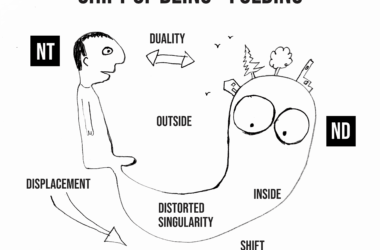
His research is based on an “inner laboratory” — a subjective but epistemologically precise experiential space in which perception, thought, emotion and action are intertwined. From this practice he develops a scientific culture that does not objectify but resonates, inspired, among others, by Karen Barad’s agential realism, Donna Haraway’s situated knowledges, Robin Wall Kimmerer’s relational ecology and the neurodivergence-theoretical critique of Melanie Yergeau and Damian Milton.
In the sense of Barad, Speed understands research not as a distanced act of cognition but as intra-action with the world — a performative, material-discursive event that is constituted through relation, difference and responsibility. For him, knowledge is not a possession but an ethical process in which truths emerge because they are bodily felt, artistically shaped and politically carried.
His method stands across from standardised science, not out of rejection but because it arises from a different epistemic paradigm: one that acts out of autistic coherence, social experience of difference and creative necessity. Here, new concepts, new systems of order and new ethics emerge — beyond objectivity and the compulsion to prove. In his books, performances and interventions this thinking manifests itself in a connection of analytical depth, poetic density and radical social critique.
Timothy Speed represents a post-neurotypical scientific culture in which subjectivity is not regarded as distortion but as a productive precondition for new forms of understanding the world.